Common Solenoid Valve Block Failures in Mercedes-Benz and How to Fix Them
For Mercedes-Benz owners driving ML W164, GL X164, or the larger W166/X166 and W221 S-Class platforms, a failing solenoid valve block is one of the most frequently encountered and misunderstood air suspension problems. Mercedes refers to its air suspension as the AIRMATIC system, and the solenoid distribution valve (also called the Airmatic valve unit or distribution block) is the electronic-pneumatic controller that maintains the system's pressure balance. Once this unit begins to degrade, a cascade of seemingly unrelated symptoms can confuse even experienced technicians.
The early signs of a failing Mercedes solenoid valve block are subtle. You may notice that the vehicle takes longer than usual to rise to the correct ride height after startup. Or you might observe that one corner — most often a rear — settles slightly lower than the others after the vehicle has been parked overnight. These symptoms are caused by micro-leaks in the solenoid valve seats that allow air to bleed slowly past the closed valve, lowering the pressure in the affected air spring over time. As the leak worsens, the compressor runs more frequently to compensate, shortening its service life in the process.
More advanced failures produce dramatic symptoms: all four corners simultaneously sagging when the ignition is switched off, the system refusing to self-level when passengers enter or exit the vehicle, or persistent AIRMATIC fault codes appearing on the instrument cluster. At this stage, the solenoid valve block has typically developed multiple simultaneous leaks across several valve seats and requires complete replacement rather than repair. Attempting to reseal individual solenoid seats is rarely successful because the manifold body itself is often damaged by prolonged exposure to contaminated air or oil mist from the compressor.
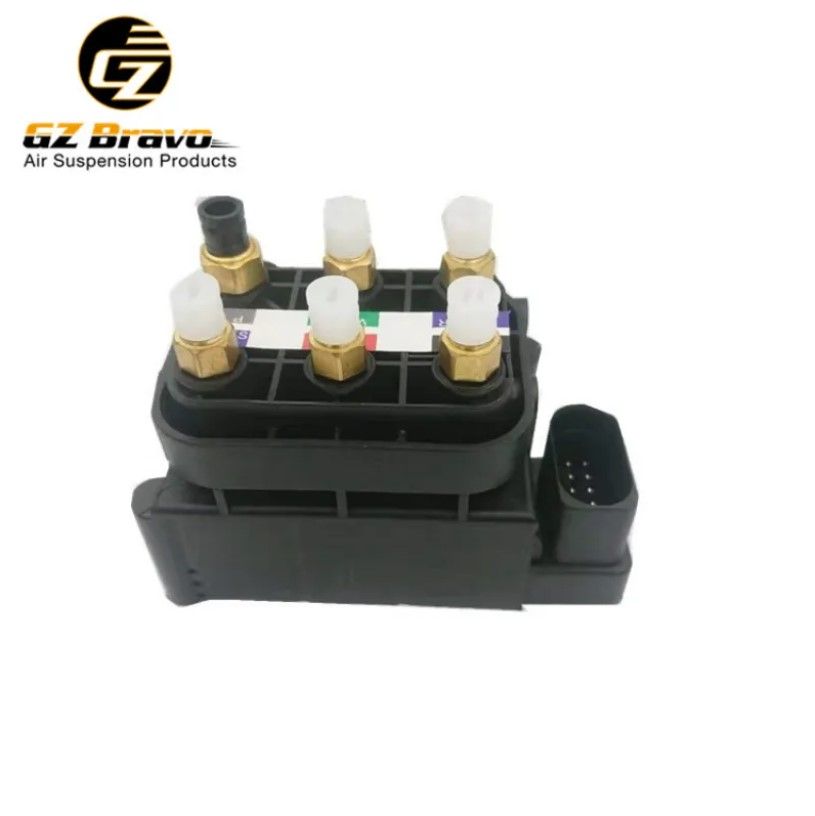
The GZ Bravo replacement solenoid valve block for Mercedes AIRMATIC applications covers the ML W164, GL X164, and the larger GLS/ML W166 and X166 models, as well as the prestigious S-Class W221. It carries OEM reference numbers A2123200358, A2123200658, and 2123200158, and is designed as a direct plug-and-play replacement. The unit ships as a complete assembly with all solenoids pre-installed, correctly torqued, and leak-tested at the factory before dispatch.
Step-by-Step Repair Guidance for Mercedes AIRMATIC Valve Replacement
Before beginning any Mercedes AIRMATIC valve block replacement, connect a Star Diagnostic (XENTRY) or compatible system to read all active and stored suspension fault codes. Document every code present, as this information is essential for post-repair verification. Depressurize the system using the diagnostic software's "vent suspension" function — never disconnect air lines under pressure, as this can damage the line fittings and create additional leaks.
The valve block on W164 and X164 models is located in the engine bay, typically mounted on the suspension strut tower area. On W166/X166 models, the location is similar but may be partially obscured by trim panels. Disconnect the multi-pin electrical connector first, then use a lint-free cloth to clean the air line fittings before disconnecting them to prevent any contamination from entering the open ports. Cap each port immediately after disconnection using clean rubber plugs or finger covers.
Install the new GZ Bravo valve block in the reverse sequence, ensuring that each air line is reconnected to its correct port. Refer to the port labeling on the new unit or a workshop manual diagram to confirm correct assignments before tightening the fittings. After installation, pressurize the system via the diagnostic software and check for any audible hissing at the new unit. If the installation is leak-free, clear all fault codes and perform a full suspension calibration cycle. The vehicle should return to factory ride height on all four corners within a few cycles. Using a genuine-quality OEM-specification replacement like those offered by GZ Bravo ensures this repair is completed correctly the first time.