Fleece Fabric for Hoodies and Casual Wear: A Complete Quality Guide
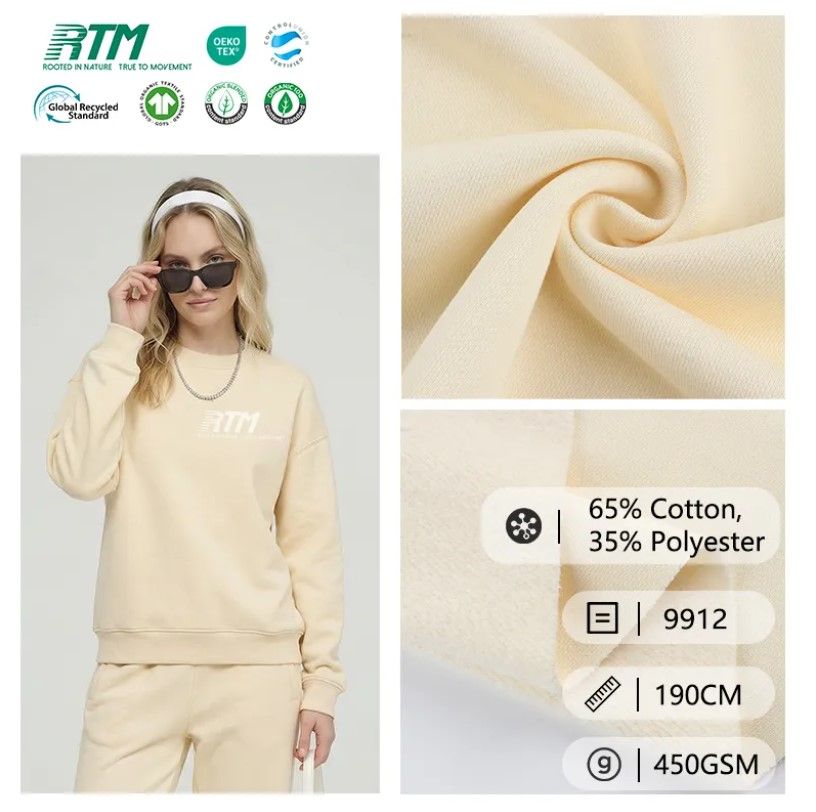
Selecting the right fleece fabric for a hoodie or casual wear collection requires navigating a complex matrix of construction types, fibre compositions, functional finishes, and weight specifications — each with direct implications for the finished garment's performance, perceived quality, and manufacturing efficiency. This quality guide provides a systematic framework for evaluating fleece fabrics for hoodie and casual wear applications, drawing on the technical knowledge embedded in Foshan Jinhui Textile's eighteen years of specialised knit fabric production.
Evaluating Base Construction Quality
The foundation of any fleece fabric's quality is its base knit construction — the underlying structure before brushing or raising creates the fleece surface. Quality base constructions are characterised by even loop uniformity across the full fabric width, consistent stitch density without dropped stitches or structural defects, appropriate yarn count for the intended GSM weight, and dimensional stability that resists distortion during finishing and garment production. Fabrics with inconsistent base constructions produce fleece surfaces that are uneven, prone to premature pilling, and likely to distort during cutting and sewing — all of which create costly quality problems in garment production and consumer dissatisfaction in end use.
The Raising and Finishing Process
The quality of a fleece fabric's raised surface is determined by the raising and finishing process applied to the base knit. Raising involves passing the fabric through rollers covered with fine wire pins that pull individual fibres out of the yarn to create the napped surface. The density, direction, and duration of the raising process determine the depth, softness, and evenness of the fleece surface. Anti-pill treatments — applied before or after raising — cross-link surface fibres to prevent the formation of pills (surface balls of matted fibre) that degrade the appearance of untreated fleece with use. Quality raising and finishing processes are visible in the evenness and softness of the fleece surface, and reveal themselves in the material's durability after repeated washing.
Weight Selection for Hoodie Applications
The appropriate fleece fabric weight for a hoodie depends on the intended market positioning, target season, and consumer expectations. Entry-level and mid-market hoodies in the 280–380 GSM range provide comfortable warmth for everyday autumn and winter use at accessible price points. Premium and luxury hoodies in the 380–500 GSM range deliver the substantial hand feel, draped weight, and generous warmth that consumers associate with investment-quality casualwear. Ultra-heavyweight hoodies at 500–630 GSM occupy the top tier of the premium casual market — exceptionally warm, dramatically heavy in the hand, and immediately recognisable as something of exceptional quality that commands premium pricing.
OEM Fleece Fabric Production at Foshan Jinhui Textile
Foshan Jinhui Textile's OEM fleece fabric production capabilities cover the full range of hoodie and casual wear applications, from standard cotton-polyester blend terry in entry-level weights to premium 100% cotton fish-scale terry in heavyweight constructions. Custom colour development, with a comprehensive colour matching service and 3–5 day sample production, enables brands to specify exact seasonal colour palettes. Custom weight and construction specifications — developed collaboratively with the client's design team — enable truly differentiated fabrics that competitors cannot easily replicate. All production is conducted under ISO-aligned quality management processes with OEKO-TEX Standard 100 certification, ensuring that every batch of fleece fabric delivered to wholesale and OEM clients meets the quality, safety, and performance specifications that premium apparel brands require.