Infrastructure projects operating under high-load conditions — power plants, offshore platforms, heavy rail bridges, and petrochemical facilities — demand repair and grouting materials that can withstand not just static compression but also dynamic vibration, thermal cycling, and chemical exposure. Selecting a suitable epoxy grouting material for these environments requires a thorough understanding of performance requirements, application constraints, and long-term durability characteristics.
Critical Performance Criteria for High-Load Applications
Engineers specifying epoxy grouting for high-load applications must evaluate several key performance indicators. Compressive strength alone is not sufficient. Flexural strength, creep resistance under sustained load, modulus of elasticity, and resistance to hydrocarbon chemicals all need to be verified against the project-specific demands. A product optimized for anchor bolt grouting in a gas turbine mounting, for example, will have different priorities than one used for void filling under bridge expansion joints.
Vibration Resistance: The Defining Challenge
Perhaps the most demanding test for any grouting material in industrial settings is vibration fatigue. Rotating machinery, compressors, and diesel generators subject base plate grout to millions of cyclic stress reversals over their operational life. Standard cementitious grouts typically debond and crumble under sustained vibration within a few years. High-performance epoxy grouting materials, formulated with carefully controlled modulus of elasticity (typically 3,000–5,000 MPa), maintain intimate contact between machine base and concrete plinth throughout the equipment's service life.
Chemical Compatibility in Aggressive Environments
In petrochemical plants, refineries, and offshore installations, grouting materials are exposed to fuels, lubricants, acids, and caustic solutions. Epoxy formulations generally demonstrate superior chemical resistance compared to cementitious alternatives. However, not all epoxy systems are equal — some are more susceptible to degradation by aromatic solvents, while others may soften under sustained heat above 60°C. Always request a chemical resistance table from the manufacturer and verify compatibility with the specific chemicals present on your site.
Selection Checklist for Procurement Teams
- Confirm compressive strength ≥ 70 MPa after full cure
- Verify creep coefficient under sustained load specification
- Check temperature range compatibility with site conditions
- Request third-party test certificates for chemical resistance
- Confirm minimum application temperature and pot life at ambient conditions
- Assess self-leveling vs. thixotropic grade for the specific application geometry
Long-Term Cost Economics of Premium Epoxy Grout
While premium epoxy grouting materials carry a higher unit cost than cementitious alternatives, the total lifecycle cost calculation almost always favors epoxy. Eliminating premature failure, re-grouting downtime, and equipment re-alignment costs in even one machinery overhaul cycle typically recovers the differential in material cost many times over. The specification of a quality-verified epoxy grouting product is therefore sound engineering economics, not an extravagance.
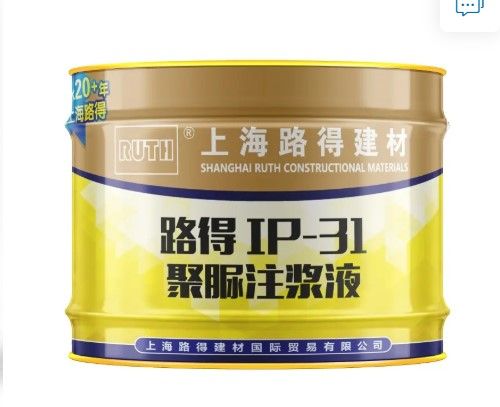
Shanghai Ruth Constructional Materials supports procurement teams with full technical documentation, sample testing programs, and OEM formulation services — ensuring that the right product reaches every project, regardless of its unique demand profile.